The last few weeks we’d just been getting on with it — in the current climate, that counts as a good thing. School, sport, and work filled the days. We’d been watching the COVID-19 situation in Victoria with a knot in our stomachs and were grateful that here in NSW things seemed relatively quiet and under control.
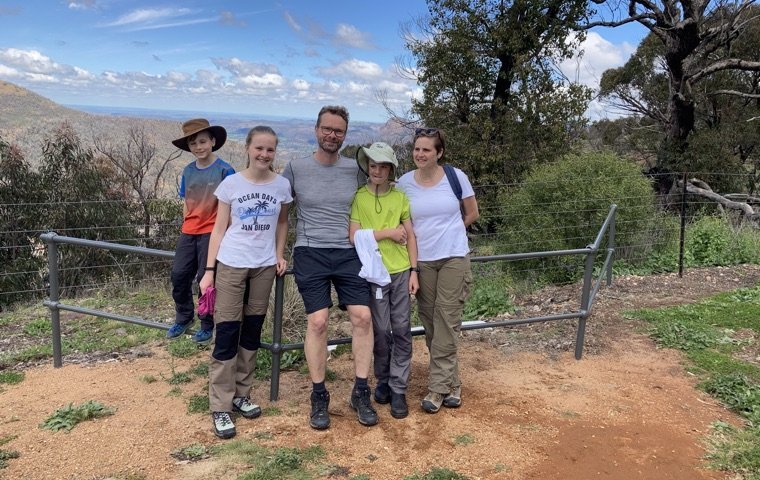
Finally travelling again, getting out and seeing the country — we’d missed it so much. Last week was the moment. The kids were on spring school holidays and we headed out into regional NSW. The family on our Australian side comes from Coonabarabran, a small town that just about sits on the greener side of the Great Dividing Range. The drive takes about six hours. The roads get thinner and less travelled. More and more dead kangaroos line the shoulders.
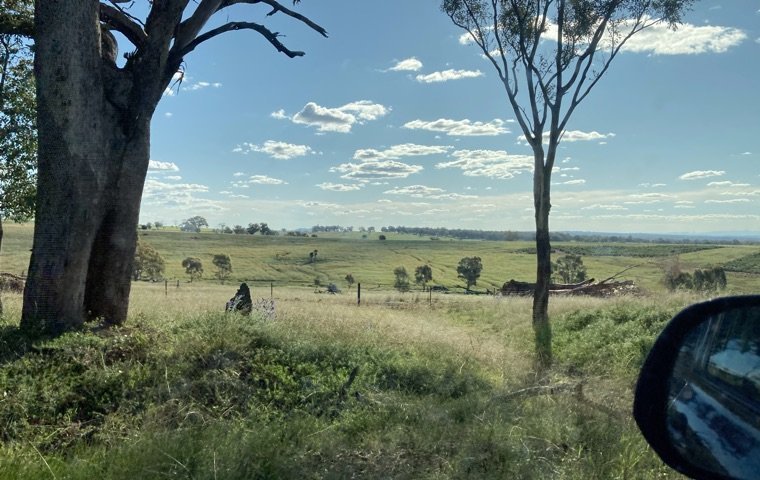
Coonabarabran was founded in 1859. About 2,500 people live in “Coona.” It bills itself as the last service station before Warrumbungle National Park. The town has seen better days. One would hope. In the centre of town, a brick clock tower stands on a roundabout — the clock still works, remarkably. Across the road, the Imperial Hotel holds its ground, having outlasted the Coonabarabran Hotel on the opposite side and now reigning as the sole hospitality establishment in town.
Apart from the relatively new Woolworths, the little shops look like they bought their last stock about twenty years ago and have been running down ever since. “For Sale” — everything in town seems to be on the market. If you want a cheap house, come to Coonabarabran. The streets are wide, the avenues generous, and the traffic practically non-existent.
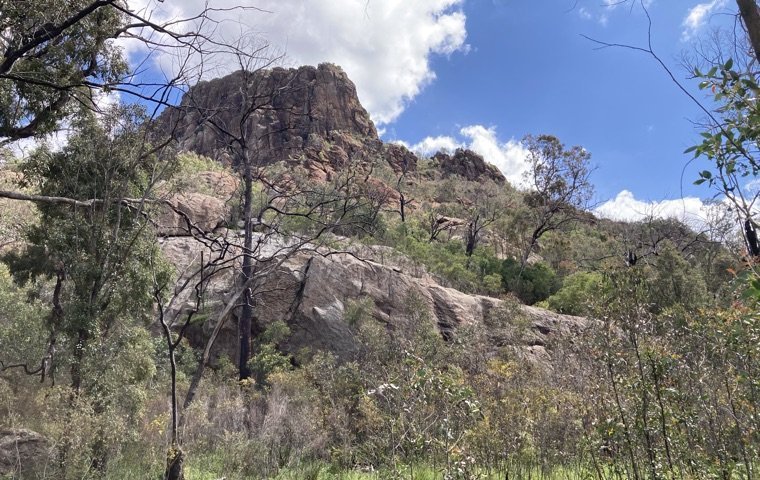
But we saw Coonabarabran through a different lens. This is where the family lived, for generations. The former houses have since been replaced or stand as ruins. On our first day we walked around Timor Rock — a massive formation opposite the old farm where my Australian mother-in-law’s grandfather lived. As a kid, she was never allowed to walk around Timor Rock, which is precisely why she does it now. So the entire extended family set off bushbashing through the scrub. There was no path. What there was, was a large kangaroo that had apparently just managed to drag itself into the dense undergrowth after being hit by a car. It reared up one last time at the approaching group of hikers, then collapsed with a heavy groan.
Since the 1960s, Coonabarabran has been the “Astronomy Capital of Australia.” In a way, it was fortunate that there was simply nothing in and around Coona — because when the Australian National University went looking for a site for a major telescope, Coonabarabran won out. The area had always been known for its dark skies, minimal light pollution, and mostly cloudless nights. We were unlucky with the weather — overcast the whole time — but we’ll be back to book ourselves in at Siding Spring Observatory.
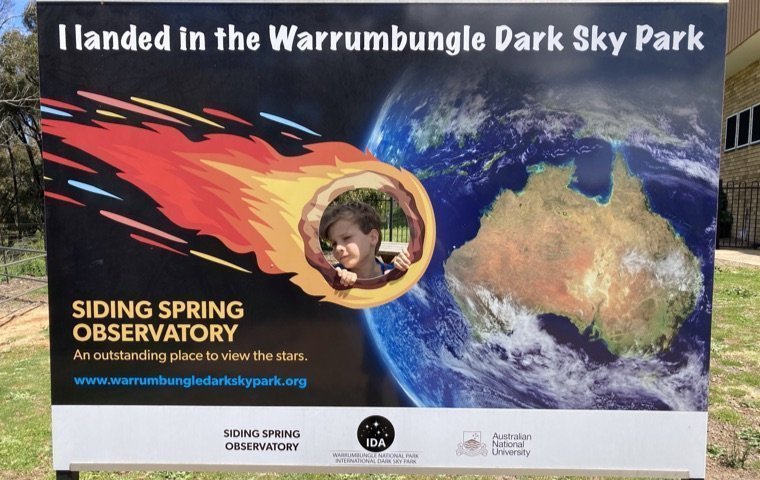
The highlight of our trip — apart from the family memories — was Warrumbungle National Park, the only Dark Sky Park in Australia. A magnificent national park that we’ll explore properly next time.
We also filmed a little roadtrip video on this trip, which originally lived on Vimeo.
From the archives of reinergaertner.de, running since 1997. Translated with AI help and my questionable bilingual proofreading. If you spot a Germanismus — that’s a feature, not a bug.